Violins & Violas
Baroque Instruments
The violin is one of the few objects whose basic design has remained remarkably unchanged for more than four hundred years. To recreate the sound and playing characteristics of the Baroque period, we reverse even the few developments that have taken place since then.
Did you ever play Bach on a Baroque Instrument?
If not, perhaps the time has come. The special response, the rich palette of colors and the natural articulation reveal a sound world that is both intimate and inspiring. For many musicians, it opens the door to a whole new world of sound.
How Baroque does a Baroque Instrument need to be?
The answer is simple: as baroque as you want it to be.
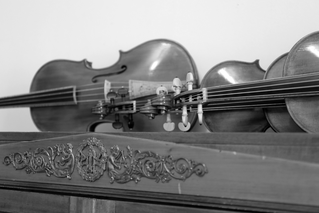
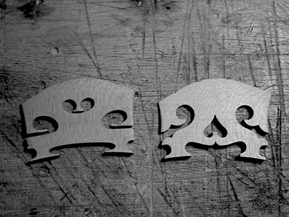
A first step can be as simple as replacing modern strings with gut strings. Adding a baroque bridge and tailpiece will bring you even closer to the characteristic sound and response of a historical instrument.
To experience the full character of a baroque setup, however, the instrument itself needs to be built differently. A lighter baroque bass bar and a veneered fingerboard reduce the overall weight and allow the instrument to respond more freely to the articulation and bowing techniques of the period.
For players seeking complete historical authenticity, we also offer the original, thicker neck profile. It is worth remembering, however, that comfort was not a primary concern for seventeenth- and eighteenth-century musicians. We therefore also build baroque instruments with modern neck dimensions, allowing today's players to enjoy the sound and character of a baroque instrument without compromising playing comfort.
Characteristics of Baroque Instruments
What Can Baroque Violins Learn from Modern Violas?
More than you might expect.
Although they belong to different musical worlds, both instruments face a remarkably similar challenge: relatively low string tension. As a result, many of the construction principles that work so well for a modern violin are less effective here.
Weight is another important factor. Both baroque violins and violas benefit from a light, responsive construction that allows the instrument to speak freely without sacrificing depth of tone.
Over the years, my work on modern violas has taught me countless lessons about balancing strength, flexibility and weight. Those same principles have become the foundation of my approach to building baroque violins.
Building for lower string tension requires a different way of thinking about arching and weight.
This is one of the reasons why building baroque instruments feels like such a natural extension to viola making.