Baroque vs. Modern:
Technical Differences
At first glance, a baroque and a modern violin may look very similar. A closer look, however, reveals many subtle differences that shape the way the instrument feels and sounds.
- Baroque strings are always made from gut. The upper strings consist of plain gut, while the lower strings are wound with silver or copper wire. Modern strings, by contrast, are available
in a variety of materials, including synthetic cores, steel and gut.
- During the Baroque period, the standard pitch was about a semitone lower than it is today. Comined with the use of gut strings, this resulted in considerably lower string tension than on
a modern instrument. As a consequence, a shorter and lower bass bar is sufficient to support the top plate.
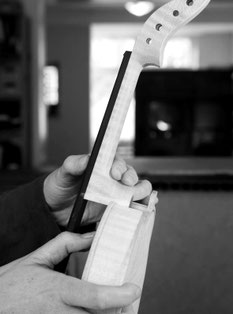
- To keep the instrument as light and responsive as possible, the fingerboard and tailpiece are usually made from lightweight woods such as spruce and veneered with ebony. Solid maple is another traditional option. Heavy solid ebony, commonly used on modern instruments, is deliberately avoided.
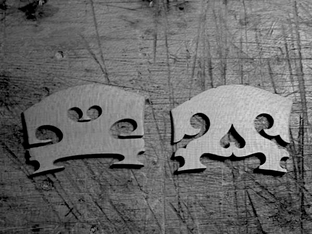
4. The design of the Baroque bridge (right; modern bridge on the left) plays an important role in creating the refined and delicate sound of a Baroque instrument.
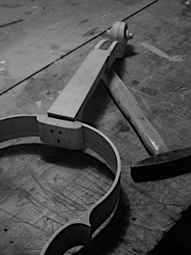
5. The modern neck is set into the body using a mortise-and-glue joint, whereas Baroque instruments traditionally use a nailed neck attachment.